Your PSU's Wattage Label Is Lying to Your Face — Here's What You're Actually Getting
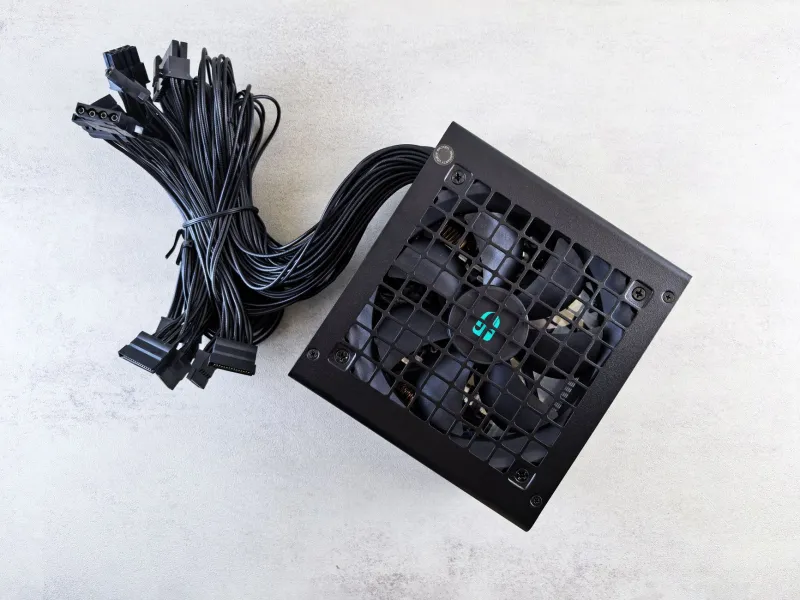
Let's set the scene. You spent a respectable chunk of your build budget on an 850W power supply. You checked the box, you saw the number, you felt safe. Maybe even a little smug. Then you loaded up a demanding game, your system crashed, and now you're staring at a black screen wondering what went wrong.
Welcome to the wonderful world of phantom wattage — the gap between what power supply manufacturers print on the box and what your components actually receive when things get real.
The Number on the Label Is a Best-Case Scenario
Here's the thing nobody in the power supply marketing department is eager to explain: that rated wattage figure represents a peak output measured under very specific, very flattering conditions. We're talking about controlled lab temperatures — typically around 25°C (77°F) — with loads spread evenly across every power rail, and test durations short enough that heat doesn't become a factor.
Your gaming PC does not live in that lab.
Your PC lives in a mid-tower case with three-year-old cable management, next to a radiator, in a room that hits 85°F every July. And when your RTX 4080 decides it wants every watt it can get during a GPU-heavy scene, that load isn't evenly distributed — it hammers the 12V rail hard while the 3.3V and 5V rails basically take a nap.
Real-world sustained delivery from an "850W" unit can drop anywhere from 5% to 15% below its rated number depending on temperature, load distribution, and how aggressively the manufacturer interpreted the spec. That's potentially 120 watts of capacity you paid for and will never see.
Efficiency Ratings: The 80 PLUS Shell Game
The 80 PLUS certification program was genuinely well-intentioned. The idea: test PSUs and certify that they operate at 80% efficiency or better at 20%, 50%, and 100% load. Sounds useful. And it is — but only if you understand what it's actually measuring.
First, 80 PLUS tests are conducted at a cozy 23°C ambient. Not your case interior. Not your July gaming setup. A nice, cool 23°C.
Second, and this is where it gets spicy, efficiency ratings tell you how much power is wasted as heat, not how much power reaches your components at sustained loads. A Platinum-rated PSU is more efficient than a Bronze one — that part is true. But "more efficient" doesn't automatically mean "delivers its full rated wattage under sustained gaming loads." Those are two different conversations.
Independent testing from labs like Cybenetics and reviewers at Hardware Busters and Tom's Hardware have repeatedly demonstrated that units from budget-tier brands can drop well below their rated output when ambient temperatures rise above 40°C — which, inside a loaded gaming case, is not an unusual number.
The Rail Problem Nobody Warned You About
Modern gaming builds are almost entirely 12V-rail monsters. Your GPU runs on it. Your CPU runs on it. Your NVMe drives increasingly run on it. The 3.3V and 5V rails, which PSU manufacturers also factor into that total wattage figure, are mostly handling your USB devices and a few legacy connectors.
So when a PSU is rated at 850W total, you need to look at what it can sustain on the 12V rail specifically. A unit advertising 850W total might only be rated for 70–72A on the 12V rail, which works out to roughly 840–864W — fine on paper. But a cheaper unit playing fast and loose with its specs might list an 850W total while the 12V rail can only sustain 600–700W continuously before protections kick in or the unit throttles.
This is not hypothetical. It's a documented pattern in lower-cost units from manufacturers who build to a price point first and engineer to a spec second.
What the Independent Testers Are Actually Finding
Let's talk numbers, because that's where the story gets uncomfortable for PSU marketing teams.
Cybenetics, one of the more rigorous independent testing organizations, evaluates PSUs at multiple temperature points including 40°C and 46°C — much closer to real-world case conditions. Their data consistently shows efficiency and output stability degrading at higher temperatures, with some budget units losing meaningful capacity well before they hit their rated load.
Jonny Guru (now part of Tom's Hardware) built an entire reputation on calling out units that couldn't sustain their rated output. The pattern he identified over years of testing: brand-name units from Seasonic, Corsair (higher-tier lines), EVGA (RIP), and Super Flower tended to deliver what they promised. Generic and rebadged units from less transparent manufacturers? Much more variable.
The takeaway isn't that all PSU ratings are fiction. It's that the variance between a trustworthy unit and a questionable one can be 10–20% of rated capacity — and you'd never know from the label alone.
So How Much PSU Do You Actually Need?
Here's the BananaPC practical guide to not getting taken for a ride:
Use a reputable power calculator, then add a real buffer. Tools like OuterVision's PSU calculator are solid starting points. Once you have an estimated system wattage, add 20–25% headroom — not because your system will use it, but because you want your PSU operating in the 50–80% load range where it's most efficient and most stable.
Don't buy on wattage alone. Two 850W PSUs can perform completely differently. Brand, build quality, and independent reviews matter more than the number on the sticker. Spend fifteen minutes on a Cybenetics or Tom's Hardware review before you buy.
Higher efficiency tiers are worth it — to a point. Gold certification is the sweet spot for most builds. Platinum and Titanium deliver diminishing returns on electricity savings for typical gaming rigs unless you're running the system 24/7.
Modular vs. non-modular is a cable management choice, not a power quality choice. Don't let that feature distract you from the actual electrical specs.
Watch for suspiciously cheap units claiming high wattage. If an 850W PSU costs $45 with free shipping and has a brand name you've never seen before, you are not getting 850W. You are getting optimism and fire risk.
The Banana in the Room
Look, nobody's suggesting PSU manufacturers are twirling mustaches and cackling over their phantom wattage schemes. Most of this is just the natural result of testing standards that prioritize repeatability over real-world conditions. But the end result is the same: you might be buying capacity that evaporates the moment your system actually needs it.
The fix is straightforward. Buy from reputable brands, read independent reviews from labs that test under real conditions, add sensible headroom to your wattage estimate, and stop treating the number on the box as gospel.
Your GPU is hungry. Make sure you're actually feeding it.