Coil Whine Is Slowly Driving You Insane — And Your Cheap PSU Is the Culprit
Photo: Danamsellem, CC BY-SA 4.0, via Wikimedia Commons
Let's paint a picture. You've dropped a small fortune on a beefy GPU, a capable CPU, and a cooler that looks like it escaped from a NASA wind tunnel. Your rig is fast. Your rig is beautiful. And yet, from somewhere deep inside that tempered glass case, there's a faint, high-pitched whine that follows you into your dreams.
Congratulations. You've been haunted by your power supply unit, and you didn't even see it coming.
The PSU is the most consistently overlooked component in PC building culture. Builders will spend three hours debating thermal paste application techniques and then slap a no-name 650W unit in their $2,000 system because "watts are watts." Spoiler: watts are absolutely not just watts. And the price you pay for skimping on your power supply isn't just measured in coil whine — it shows up across your entire build in ways that are genuinely expensive to ignore.
What Even Is Coil Whine, and Why Should You Care?
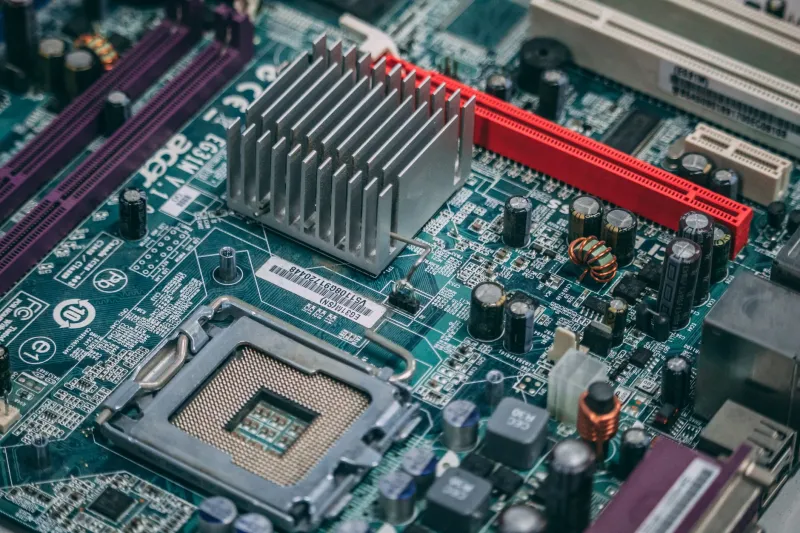
Coil whine is that buzzing, squealing, or high-frequency whimpering that comes from electromagnetic components — inductors and capacitors — vibrating under electrical load. It's not a sign your PC is dying (usually), but it is a sign that your power supply's internal components are either low quality, poorly dampened, or running harder than they should be.
Budget PSUs cut corners on the quality of their inductors and the tolerance of their capacitors. Under varying loads — which happen constantly during gaming — these components vibrate at frequencies that range from "mildly annoying" to "I need to leave the room." The higher your GPU's power draw, the worse it typically gets. So if you just upgraded to a power-hungry card and suddenly your PC sounds like a distressed cicada, now you know why.
Here's the kicker: coil whine from your PSU isn't just an acoustic nuisance. It's a symptom of electrical noise being introduced into your power delivery chain — and that has real consequences.
Dirty Power Is a Real Thing, and It's Eating Your Components
Quality power supplies don't just deliver electricity — they deliver clean electricity. This means tight voltage regulation, low ripple, and consistent output regardless of what your system is demanding at any given moment. Certified units (look for 80 Plus Gold, Platinum, or Titanium ratings) are tested for efficiency and output quality. Cheap units often fail on both counts.
When your PSU produces "dirty" power — voltage that fluctuates outside of acceptable tolerances — every component downstream takes a hit. Your GPU's VRMs work harder to compensate. Your motherboard's power delivery circuitry gets stressed. Even your storage drives, which are constantly reading and writing, can experience data integrity issues over time with sufficiently poor power quality.
None of this kills your components overnight. It's a slow burn. But if you've ever wondered why a GPU died two years into ownership, or why your system became mysteriously unstable after a few years of gaming, a cheap PSU is one of the most underrated culprits in that lineup.
The Fan Rattle Nobody Budgets For
Beyond coil whine, budget PSUs often feature low-quality sleeve-bearing fans that develop rattles, wobbles, and grinding noises as they age. Unlike most other PC fans — which you can swap out relatively easily — PSU fans are housed inside a unit that contains capacitors holding lethal charges even when unplugged. Most people aren't opening those up, and frankly, they shouldn't.
So when a cheap PSU's fan starts rattling at 18 months, your options are limited: live with the noise, replace the entire unit, or void your warranty attempting a fan swap. A quality PSU with a fluid dynamic bearing fan, or better yet, a semi-passive mode that keeps the fan off entirely under light loads, sidesteps this problem completely. The silence isn't just pleasant — it's durable.
The Actual Math on "Saving" Money with a Budget PSU
Here's where we get into the banana bread of this whole argument: the real cost calculation.
A budget 650W unit might run you $50-$70. A quality 650W unit from a reputable brand — EVGA SuperNOVA, Seasonic Focus, Corsair RM series — sits closer to $100-$130. That's a $60-$80 gap. Painful, sure. But let's think about what that gap actually buys you.
First, longevity. Quality PSUs routinely carry 7-10 year warranties. Budget units often top out at 3 years, if they're being honest. If a cheap unit dies and takes a GPU or motherboard with it — which does happen, and it's not rare — you're looking at replacing components that cost many times more than the PSU itself.
Second, efficiency. An 80 Plus Gold unit wastes roughly 10% less power as heat compared to a basic 80 Plus unit under typical loads. If your system draws 400W at the wall for 6-8 hours a day, that efficiency difference translates to real dollars on your electricity bill over years of use. It won't pay for the PSU itself, but it's not nothing.
Third — and this is the one people never account for — the cognitive tax of constant noise. Acoustic irritation is genuinely fatiguing. Studies on open-plan office noise have repeatedly shown that persistent background sounds degrade focus, elevate cortisol levels, and reduce productivity. Your gaming sessions, your work-from-home setup, your late-night YouTube rabbit holes — all of it is slightly worse when there's an ambient whine threading through it. That's not dramatic. That's just how human brains work.
What to Actually Look For in a Quiet PSU
If you're shopping for a unit that won't make your ears file a formal complaint, here's the short version:
- Semi-passive or zero RPM mode: The fan stays off under light loads. Silence when you need it most.
- Fluid dynamic bearing (FDB) fans: Quieter and longer-lasting than sleeve bearing alternatives.
- 80 Plus Gold or higher: Better efficiency means less heat, which means the fan runs less even when it does spin up.
- Fully modular cabling: Not directly related to noise, but better airflow from cleaner cable management means your system thermals stay lower, which means less fan activity overall.
- Reputable brands with real warranties: Seasonic, Corsair, EVGA (RIP, but their units are still floating around), be quiet! (yes, that's literally the brand name — respect the commitment), and Fractal Design are all solid starting points.
Peel Back the Price Tag Before You Regret It
The irony of budget PC building is that the cheapest component slots are often the most expensive mistakes. Your PSU is the foundation everything else rests on. It's the one component that touches every other component, electrically speaking. Treating it like an afterthought is like building a house and then shopping discount at the foundation pour.
A quality silent PSU won't show up in your benchmark scores. It won't make your frame rates climb or your load times shrink. What it will do is make your system more stable, your components longer-lived, your electricity bill marginally friendlier, and your gaming sessions genuinely more enjoyable — because you won't be subconsciously gritting your teeth against a high-frequency whine every time you load into a match.
Sometimes the smartest upgrade isn't the flashiest one. Sometimes it's the one sitting quietly in the corner, doing its job without complaint.
Unlike your old PSU, which is still whining about it.