The $400 GPU That's Making $1,500 Cards Sweat: Budget Graphics Cards Are Having Their Moment
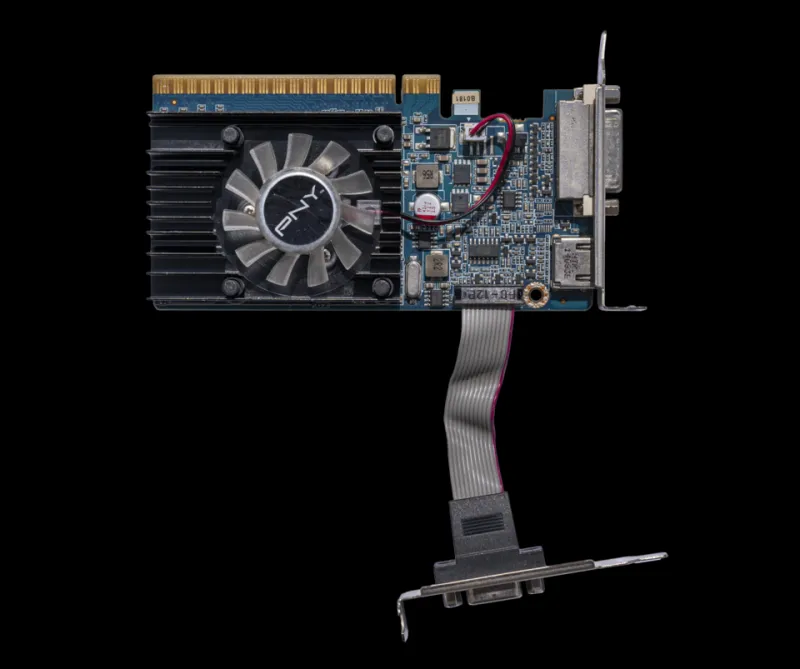
Photo: PantheraLeo1359531, CC BY 4.0, via Wikimedia Commons
There's a certain kind of PC gamer who insists that anything less than a flagship GPU is basically playing on a potato. You know the type. They haunt Reddit threads, they drop benchmark screenshots like they're handing out business cards, and they will — with a completely straight face — tell you that spending $1,500 on a graphics card is "totally reasonable" if you "care about gaming."
We respectfully disagree. And in 2024, the numbers are firmly on our side.
Welcome to BananaPC, where we peel back the price on every piece of hardware until we find the sweet spot hiding underneath. Today, we're talking about the quiet revolution happening in the mid-range GPU market — and why the $300-$500 bracket might be the most exciting place in PC gaming right now.
The Flagship Fallacy: What You're Actually Paying For
Let's get one thing straight before we dive into benchmarks: flagship GPUs are genuinely impressive pieces of engineering. Nobody's disputing that an RTX 4090 is an absolute beast, or that AMD's top-tier offerings don't have real technical merit. The question isn't whether they're good — it's whether they're proportionally good relative to their price.
And when you start doing the math on cost-per-frame, the flagship argument starts looking a little... bruised.
Take a popular AAA title like Cyberpunk 2077 running at 1440p with ray tracing enabled. A well-configured RTX 4070 Super — sitting comfortably around $599 at most US retailers — routinely pulls 80-90 FPS in this scenario. An RTX 4090, which will set you back anywhere from $1,599 to $2,000 depending on where you shop, delivers around 130-150 FPS in the same conditions. That's roughly a 60% performance uplift for a 200% price increase. Your wallet just did the math and it is not happy.
Drop down to the $300-$400 range, and the value story gets even juicier. The RX 7700 XT and RTX 4060 Ti both hover in this price zone and regularly deliver 60-75 FPS at 1440p in demanding titles. For the vast majority of gamers playing on 1080p or 1440p monitors — which, according to Steam's hardware survey, is most of us — these cards aren't a compromise. They're a completely rational choice.
Real Games, Real Numbers: The Benchmark Breakdown
Let's talk about some titles you're actually playing, because synthetic benchmarks are about as useful as a banana peel on a marble floor.
Baldur's Gate 3 — one of the most graphically demanding RPGs of the past decade — runs at a locked 60 FPS at 1440p High settings on an RTX 4060 Ti. Crank it to Ultra and you're still looking at 50-55 FPS, which is entirely playable and genuinely gorgeous. The RTX 4090 gets you to 90+ FPS at Ultra — but unless you're running a 90Hz monitor and have the reflexes of a caffeinated hummingbird, that extra headroom is largely theoretical.
Call of Duty: Modern Warfare III at 1080p High on an RX 7600 — a card you can find for around $269 — delivers a consistent 90-100 FPS. In a competitive shooter, that's more than enough to stay competitive. The game looks sharp, plays smooth, and your opponents won't know or care what GPU you're running when you're tapping them from across the map.
Alan Wake 2, which might be the most visually stunning game released in recent memory, hits 60 FPS at 1080p Medium-High on an RTX 4060. That's a $299 card running one of the most demanding titles on the market at a perfectly enjoyable framerate. That's not a consolation prize — that's a win.
The Cost-Per-Frame Equation: Math That Actually Matters
Here at BananaPC, we love a good cost-per-frame calculation because it cuts through the marketing noise faster than anything else.
The formula is simple: take the card's price, divide it by its average FPS in your target games and resolution, and you get a dollar-per-frame figure. Lower is better.
| GPU | Street Price | Avg FPS (1440p, mixed AAA) | Cost Per Frame |
|---|---|---|---|
| RTX 4060 | $299 | 68 FPS | $4.40 |
| RTX 4070 Super | $599 | 95 FPS | $6.30 |
| RTX 4080 Super | $999 | 120 FPS | $8.33 |
| RTX 4090 | $1,699 | 155 FPS | $10.96 |
| RX 7700 XT | $349 | 72 FPS | $4.85 |
The pattern is unmistakable. As you climb the price ladder, you're paying more and more per frame. The RTX 4090 costs nearly two and a half times more per frame than the RTX 4060. Unless you're running a 4K display at 144Hz and streaming professionally, you are literally paying a premium to impress people on the internet.
Who Should Actually Buy a Budget GPU in 2024?
The honest answer: most people. If you're gaming at 1080p or 1440p, playing single-player games or popular multiplayer titles, and you don't have a 4K monitor with a 144Hz refresh rate, a card in the $300-$500 range will serve you spectacularly well.
The exception — and we'll be fair here — is if you're running a high-refresh-rate 4K setup, working in 3D rendering or video production alongside gaming, or you're the kind of person who genuinely needs the absolute best and has the budget to justify it. In those cases, spending more makes sense. But that's a pretty narrow slice of the gaming population.
For everyone else? The mid-range is ripe for the picking.
Our Top Picks for 2024's Best-Value GPUs
Best Under $300: RX 7600 (~$269) — A genuine 1080p champion that punches well above its weight class. Perfect for esports titles and mid-tier AAA games.
Best Under $400: RTX 4060 Ti (~$379) — DLSS 3 support, solid 1440p performance, and a price that won't haunt your dreams. The BananaPC staff favorite for pure value.
Best Under $500: RX 7700 XT (~$349-$399) — AMD's answer to value-focused 1440p gaming, with excellent rasterization performance and FSR 3 support baked in.
Stretch Pick: RTX 4070 Super (~$599) — Technically above our $500 ceiling, but if you can stretch the budget even slightly, this card offers a dramatic leap in performance that makes it arguably the best value in the entire GPU market right now.
The Bottom Line
The flagship GPU market exists for a reason, and we're not here to tell anyone how to spend their money. But the idea that you need a $1,500 graphics card to enjoy modern PC gaming is, to put it in BananaPC terms, completely unpeeled from reality.
The $300-$500 GPU bracket in 2024 is delivering real, playable, beautiful gaming experiences across virtually every popular title. The cost-per-frame math is compelling, the real-world benchmarks back it up, and your bank account will thank you for paying attention.
Sometimes the best fruit on the tree isn't the one at the very top. It's the one right in the middle — perfectly ripe, perfectly priced, and ready to power up your rig without the sticker shock.
Check out BananaPC's GPU deals page to find the best current prices on all the cards mentioned in this article.